


How Long to Fry Pork Rinds?
Pork rinds are a popular snack, renowned for their crispy, rich flavor. However, achieving a crispy exterior, crunchy interior, and golden color requires precise frying time. So, how long to fry pork rinds?How long to fry pork rinds?
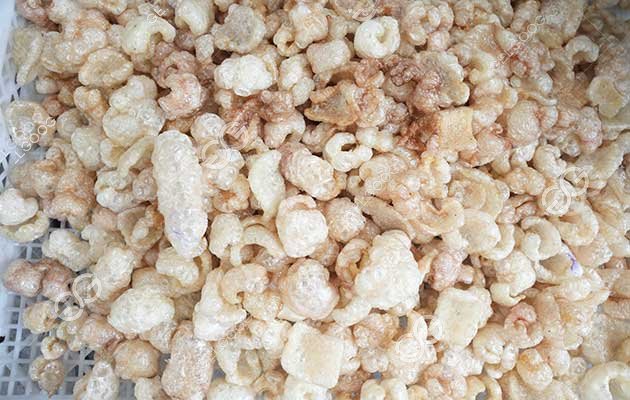
Generally, frying pork rinds takes approximately 3 to 8 minutes, depending on the thickness, pre-treatment, and oil temperature. In the frying machine, the skin undergoes pre-treatment steps such as blanching and drying. The frying time is controlled between 4 and 6 minutes to ensure uniformity and a consistent taste. During the frying process, the skin will gradually expand, blister, and turn a lighter yellow, which are important indicators of its near-ripeness.
What factors affect frying time?
Frying time for pork rinds is not fixed; it's influenced by a variety of factors:
Pork rind thickness and moisture content: Thicker or more hydrated rinds require longer frying time to fully puff. To shorten frying time, the rinds are typically boiled and defatted, then air-dried or oven-dried to evenly distribute the moisture.
Oil temperature fluctuations: Oil temperature stability directly impacts frying speed. When the oil temperature drops (e.g., when too much rind is added at once), the rinds absorb more oil and are less likely to puff, naturally extending the frying time.
Frying Temperature Requirements:
Controlling the oil temperature is crucial to the quality of the finished pork skin.
The generally recommended frying temperature range is 170°C to 190°C.
Frying temperatures below 160°C will result in the skin not expanding easily, becoming tough and dull in color.
Frying temperatures above 200°C will easily cause problems such as burning, bitterness, and excessive smoke.
In industrial production, a staged frying process is typically used:
Initial frying (160-170°C): The internal portion of the pig skin is gradually heated, promoting evaporation of moisture.
Puffing (180-190°C): The pig skin rapidly puffs and forms a crispy texture.
At the same time, the oil should be kept clean and residue should be filtered regularly to avoid affecting the flavor and color of the product.